RADDAR

RAD DAR

Shenzhen strives to develop its nine Mountain to Sea corridors in order to create a balance between the urban fabric and the nature. The Mangrove Wetland Museum’s ambition is to contribute towards this balance, yet how can it engage as many Shenzhen citizens without compromising the environmental impact it may make? In the age of knowledge availability at a finger swipe it is however still a challenge to spread the understanding of mangroves and their contribution towards the city and its inhabitants. Complex environmental systems such as mangrove wetlands are best understood in person, yet even then much of its eco-system is invisible to a human eye. Because of this there is a global stigma about mangroves as an uncivilized wasteland. Paradoxically, mangrove wetlands are the cleanest environmental typology, known as the kidney of nature. What if there were a Mangroves City Network that, alike a phone app, operated on a similar principle: informal, indirect, yet constantly present in the lives of Shenzhen’s citizens?

Mangroves City Network acts as a Shenzhen citizens' urban refuge: it activates their body senses, cleanses them. It acts as a kidney for the innovative hybrid urban living space of Shenzhen, engaging with the community and ensuring that its mission has reached as many citizens as possible.
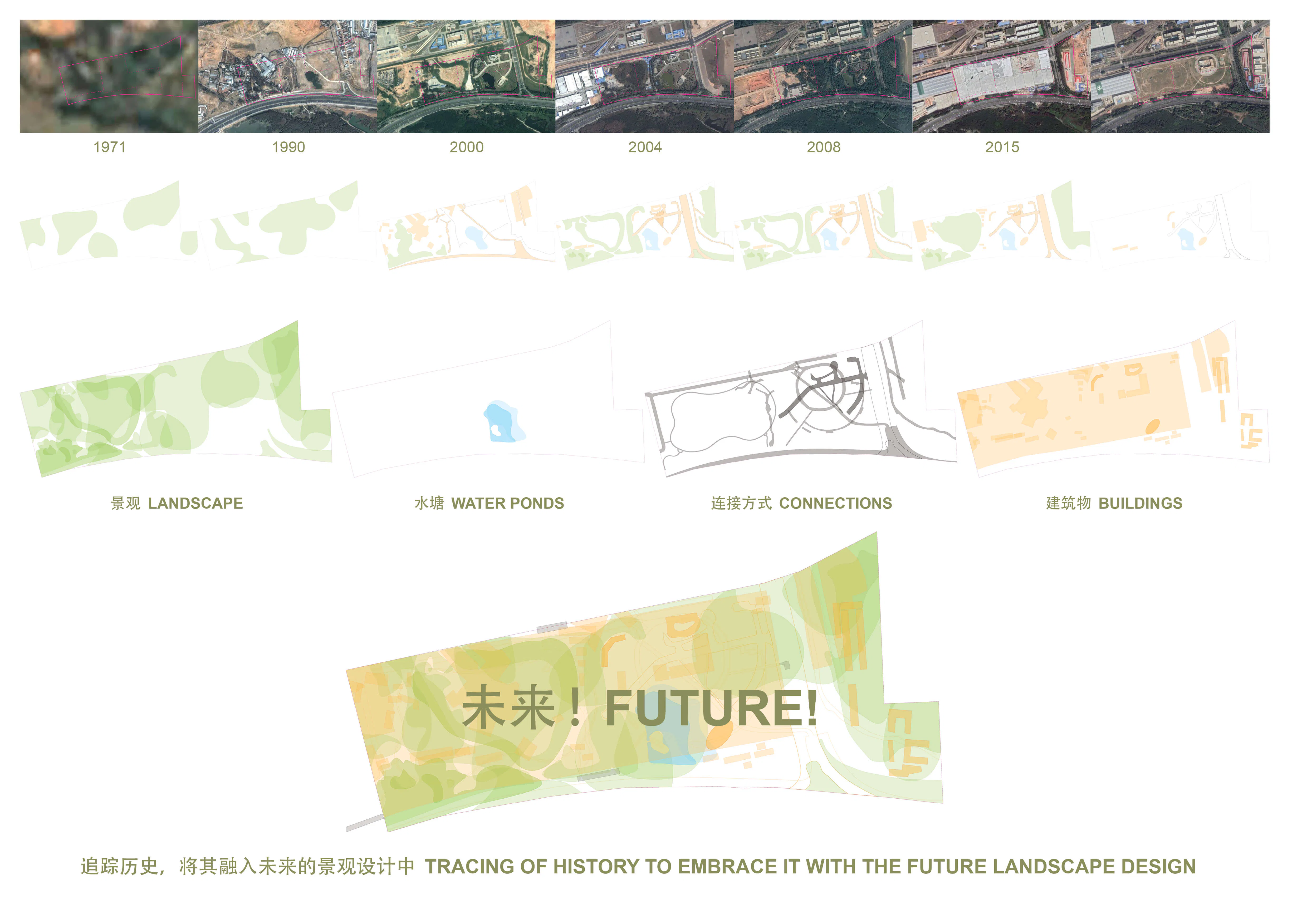
Rather than proposing another tabula rasa concept, mangroves city network celebrates the city’s complexities through interconnectivity, educating its citizens and enabling them to contribute towards the city’s urban progress. “Repurpose rather than erase” is the motto of this project, for it sees potential in urban fabric both within the site boundary and beyond. Alike a mangrove, the project listens to the city’s needs, preserves it, and enables it to innovate itself where needed. It turns its citizens into explorers, raising curiosity, resilience, and community interdependence.
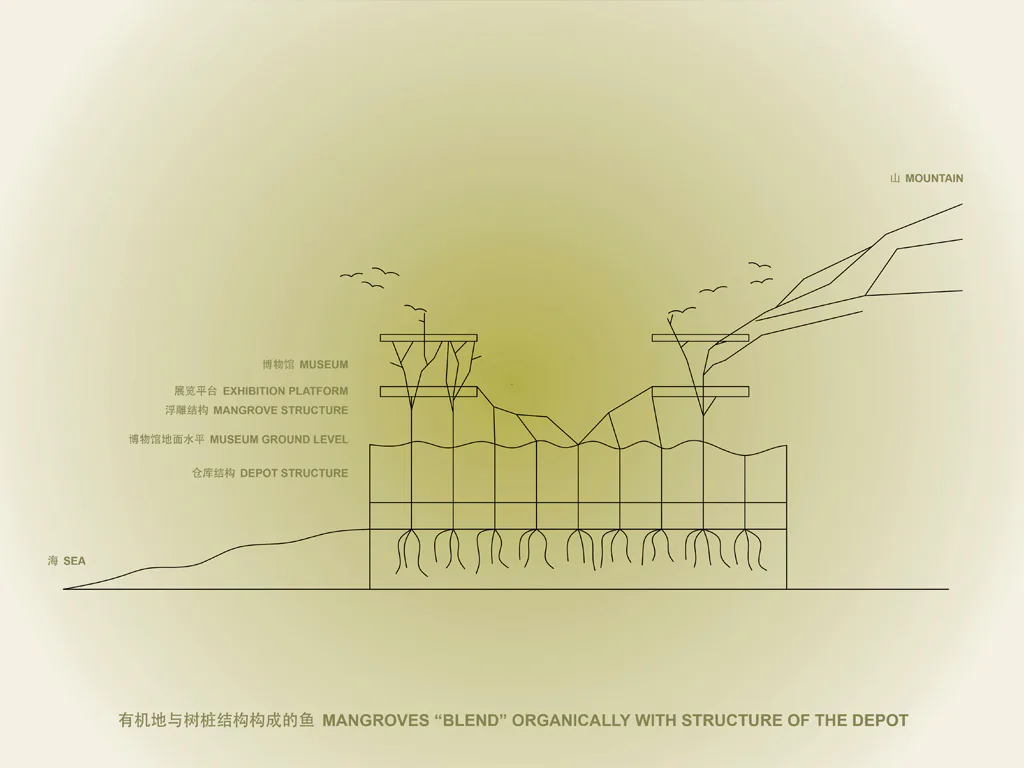
It operates as a hyper-natural machine, visually engaging the community into education about wetlands via it's structural engagement with nature. It turns the city into a museum, of which it modestly forms just a node. As such, Shenzhen Mangrove Wetland Museum redefines urbanity and openness of large-scale public architecture.
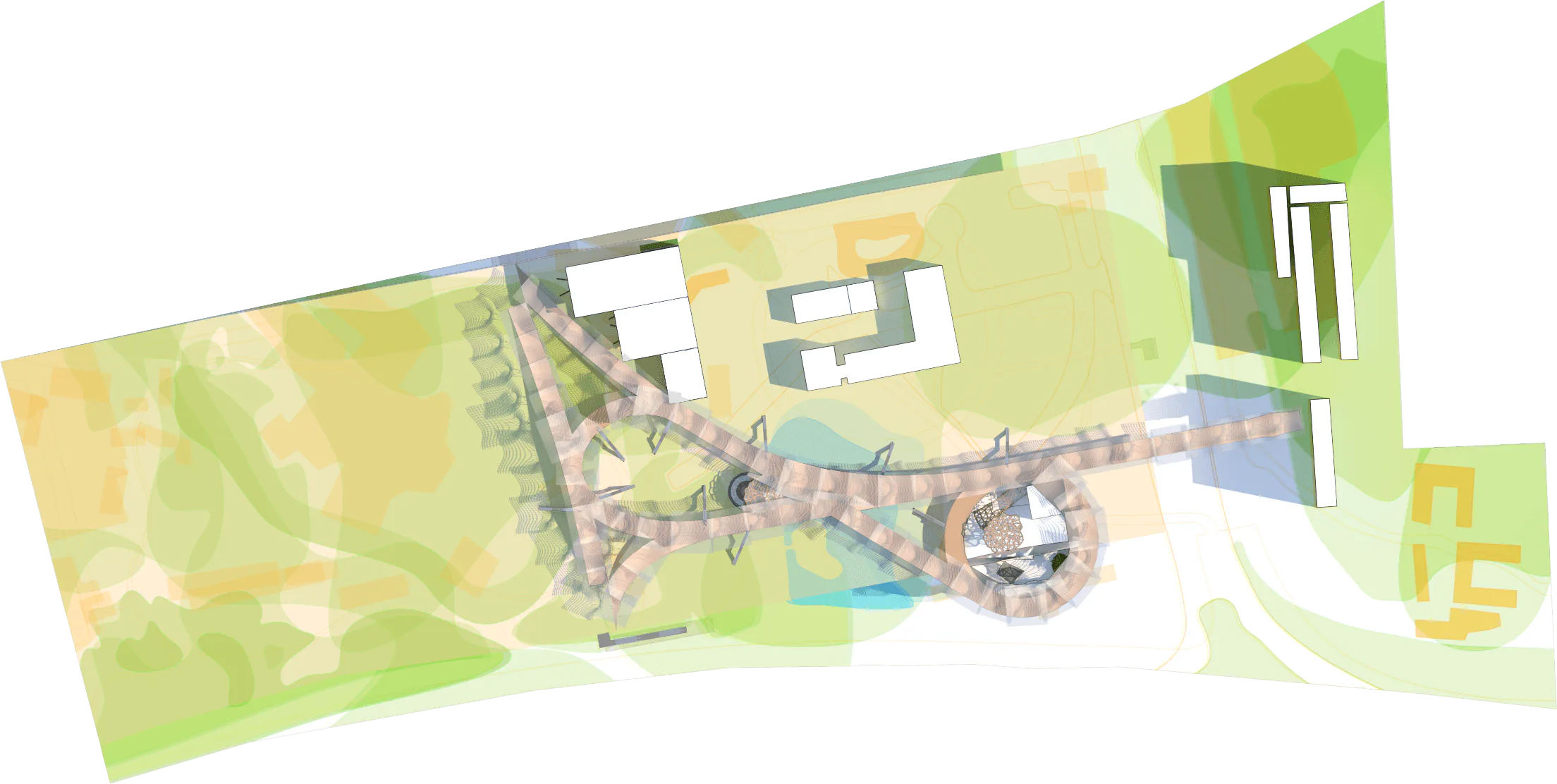
The museum is comprised of pavilion-like buildings scattered between landscape pockets and connected by a programmed circulation. This is a twofold design strategy. On the one hand, the goal is to match the scale and preserve as many buildings as possible within the site boundary, turning them into innovative museum components while minimizing the environmental impact of construction. On the other hand, given the relative flatness of the museum as per brief request, there is a significant amount of circulation required, which we expand upon and program as a publicly accessible museum component, thus giving the general public an opportunity to imagine and get inspired by pragmatic fictions. The consequence is a fusion of architecture and landscape that has the most spread out physical impact onto the site and its surrounding for immersive learning, relaxation, and exercise.
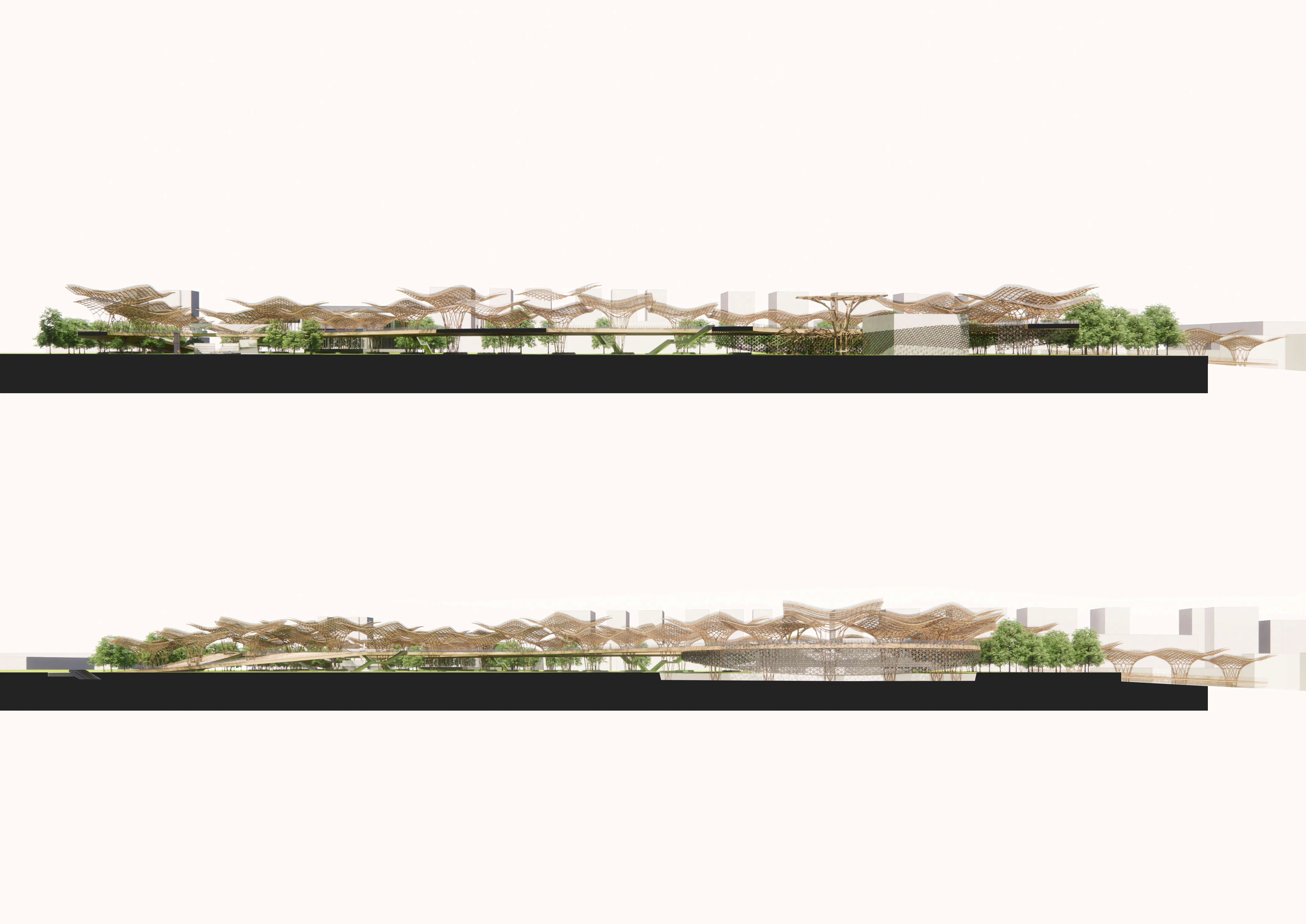
The distributed museum concept is more successful at handling the numbers of visitors because it offers them more breaks in between exhibitions, which also become memorable opportunities for an engagement with the nature and public programs. The materials proposed for the construction of the project are the most advanced technological materials: 3D printing of peat, fabrication of structural elements and effective water system purification will resonate with the qualities that surround the site, both natural and infrastructural, thus celebrating the network that the project is situated in.